From a checked résumé draft to a Word file ready to attach
A tailored résumé or cover letter for a job listing now ends as a Word document, not text to copy by hand. The draft — written by an AI model from the person's bank of confirmed facts, with every line citing the fact behind it — goes through python -m scout.build_doc, which checks it and writes a .docx ready to attach to an application.
Nothing that fails the check gets built. The builder runs the same fact check as before: a line with no citation, a number or name the cited fact doesn't contain, or an invented date stops the build and no file is written. Warnings (a verb that might overstate, a claim of ownership with no scale) are printed for the person to judge, and the build goes ahead.
Lines about the employer are checked against the listing. A cover letter has to name the company and what the role asks for. Those lines cite the job listing itself instead of a fact, and every name and number in them must appear in the listing.
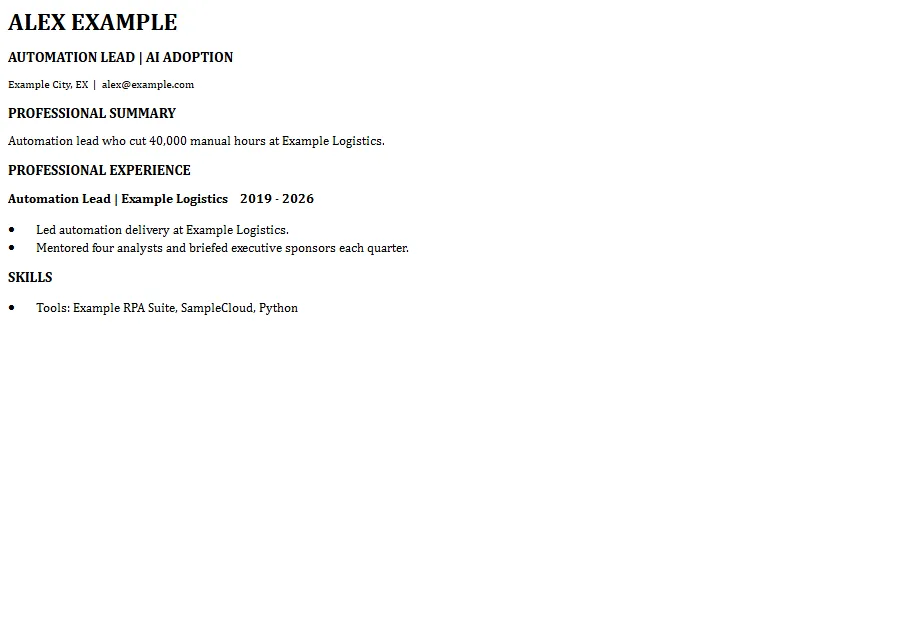
It looks like the person's own résumé. The builder opens one of their existing résumés, keeps its header (name, headline, contact line) and copies the formatting of its section headings, role lines and bullets for everything it writes. Section headings and role lines stay on the same page as what follows them.
What the first real build caught. Drafting the first real résumé exposed two gaps in the fact bank itself: job titles and employment dates had never been banked (they lived only in old résumés, so a role line couldn't pass the check), and a few headline achievements were missing too. Both were added from the résumés, and the parser now reads facts that wrap onto a second line instead of silently cutting them off.

 Job Scout