
Home · Agents

How it works: the Audio Manager

For finding the studio's sound, keeping its licences straight, and spending as little of the Owner's listening time as possible.

Philosophy

  • Nobody here can hear. No tool in this studio plays a sound and reports back on it, so no document from this Role ever says how anything sounds. The Owner listens; this Role makes listening cheap and rare.
  • The expensive part isn't the listening. Searching several sites, reading each licence, downloading, converting, checking levels and recording where a file came from is most of the work, and none of it needs ears.
  • A file with no licence row doesn't enter the library. Unattributed audio is a bill that arrives at release, when removing it costs the most.
  • One search serves every game. Projects ask this Role rather than opening a sound site, so the same search isn't repeated and the licence records don't drift apart.
  • Measure what the ear would have to guess. Levels, clipping, silence, sample rate and channels are checked in code. None of that says whether a sound is any good.

The workflow

the Audio Manager: the workflow as a flowchart1A game lists what it needseach sound, what triggers it, how long, how many variants.game2Search several sourcesfiltered to licences that stay safe if the game is ever sold, andcapped at a few candidates per sound, because more candidates costthe Owner attention.agent3Drop the wrong subjectcandidates whose own description names something else are removedbefore anyone listens.agent4Auditionplay, keep or reject, one keystroke each. A reject asks why.owner5Fetch what was kepta keep is the approval to download that one file, and nothing elseis fetched.agent6Measure each filelength, peaks, clipping, silence at head and tail, channels, samplerate.agent7Write the licence rowsevery delivered file gets its source, terms, credit requirement andchecksum.agent8Deliverinto the game's delivery folder, which the game copies from andnever writes back to.agent9The game wires it inand shows any required credits.game agentNothing worthkeeping -> a widersearch withdifferent terms ->back to step 2.A file thatmeasures badly ->reported, and backto step 4 for areplacement.the Audio Manager: the workflow as a flowchart1A game lists what it needseach sound, what triggers it, how long,how many variants.game2Search several sourcesfiltered to licences that stay safe ifthe game is ever sold, and capped at afew candidates per sound, because morecandidates cost the Owner attention.agent3Drop the wrong subjectcandidates whose own description namessomething else are removed before anyonelistens.agent4Auditionplay, keep or reject, one keystroke each.A reject asks why.↩ Nothing worth keeping -> a wider searchwith different terms -> back to step 2. →step 2owner5Fetch what was kepta keep is the approval to download thatone file, and nothing else is fetched.agent6Measure each filelength, peaks, clipping, silence at headand tail, channels, sample rate.↩ A file that measures badly -> reported,and back to step 4 for a replacement. →step 4agent7Write the licence rowsevery delivered file gets its source,terms, credit requirement and checksum.agent8Deliverinto the game's delivery folder, whichthe game copies from and never writesback to.agent9The game wires it inand shows any required credits.game agent

What it owns

  • The search across royalty-free sources, and the shortlist that comes out of it.
  • Every file's licence row: source, terms, whether a credit is required, and the exact credit line.
  • The library, including a general-use shelf projects reach for before anything new is sourced.
  • The audition app, and the record of what was rejected and why.
  • The delivery folder each game copies its audio from.

What it hands off

  • The games: wire the audio into the game and show any required credits. This Role never edits a game's code.
  • Project Manager: studio-wide rules, shared code and routing.
  • Deciding whether a sound is good, and whether to buy a licence: the Owner, always.

Guardrails

  • Never downloads anything the Owner hasn't kept, and never in bulk or quietly.
  • Never says how a sound sounds — only what it measures.
  • Never edits another project's files; findings go to that project's own agent.
  • Never collects non-commercial licences, so a picked sound can't become a problem later.
  • Never writes a game's voice lines; it records where the recordings came from.

At work

The audition app deciding two sounds — kept, then rejected with a reason — in the time it takes to hear them. The sounds in the recording are invented, because a GIF carries no audio.
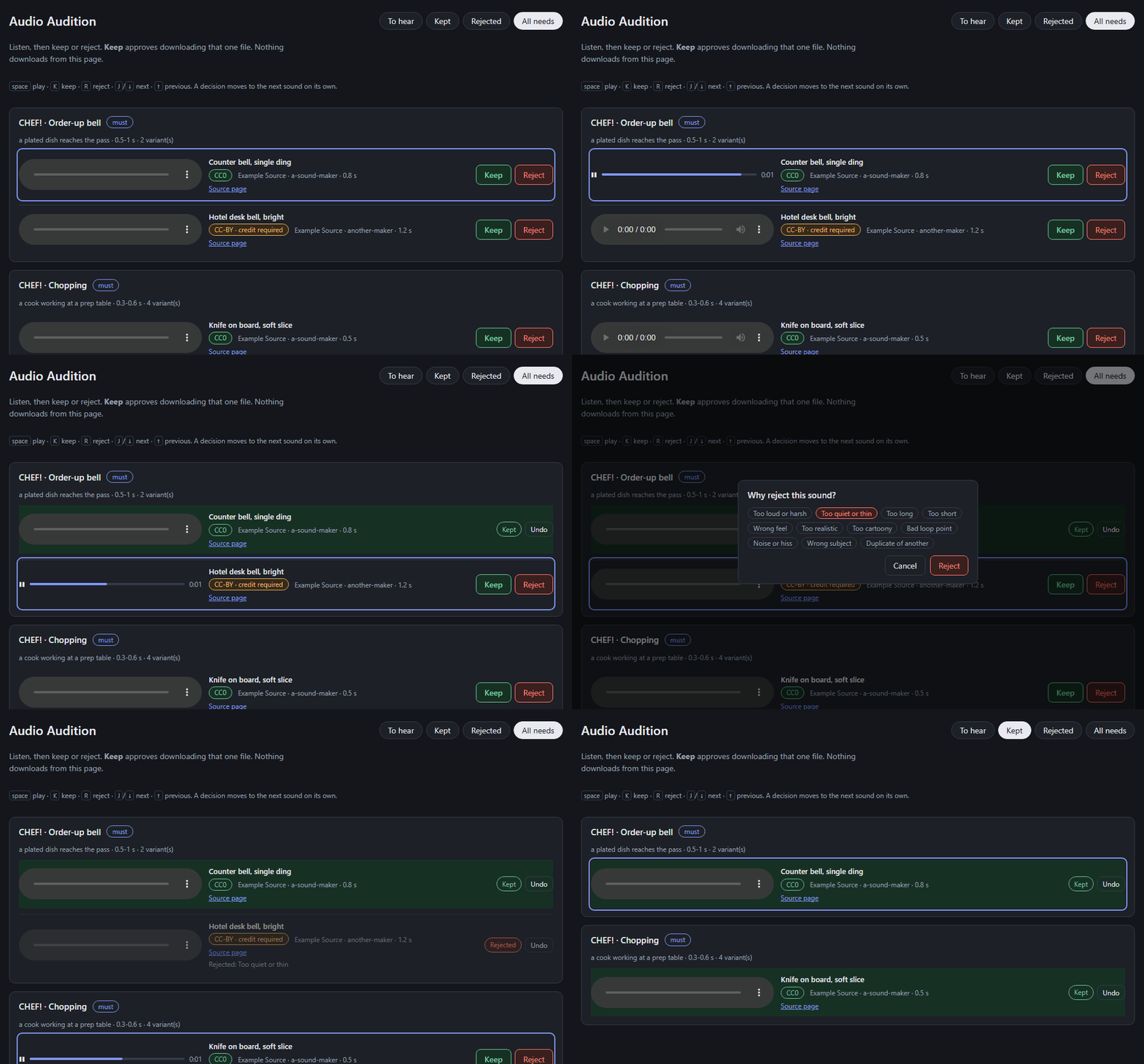
The audition app deciding two sounds — kept, then rejected with a reason — in the time it takes to
hear them. The sounds