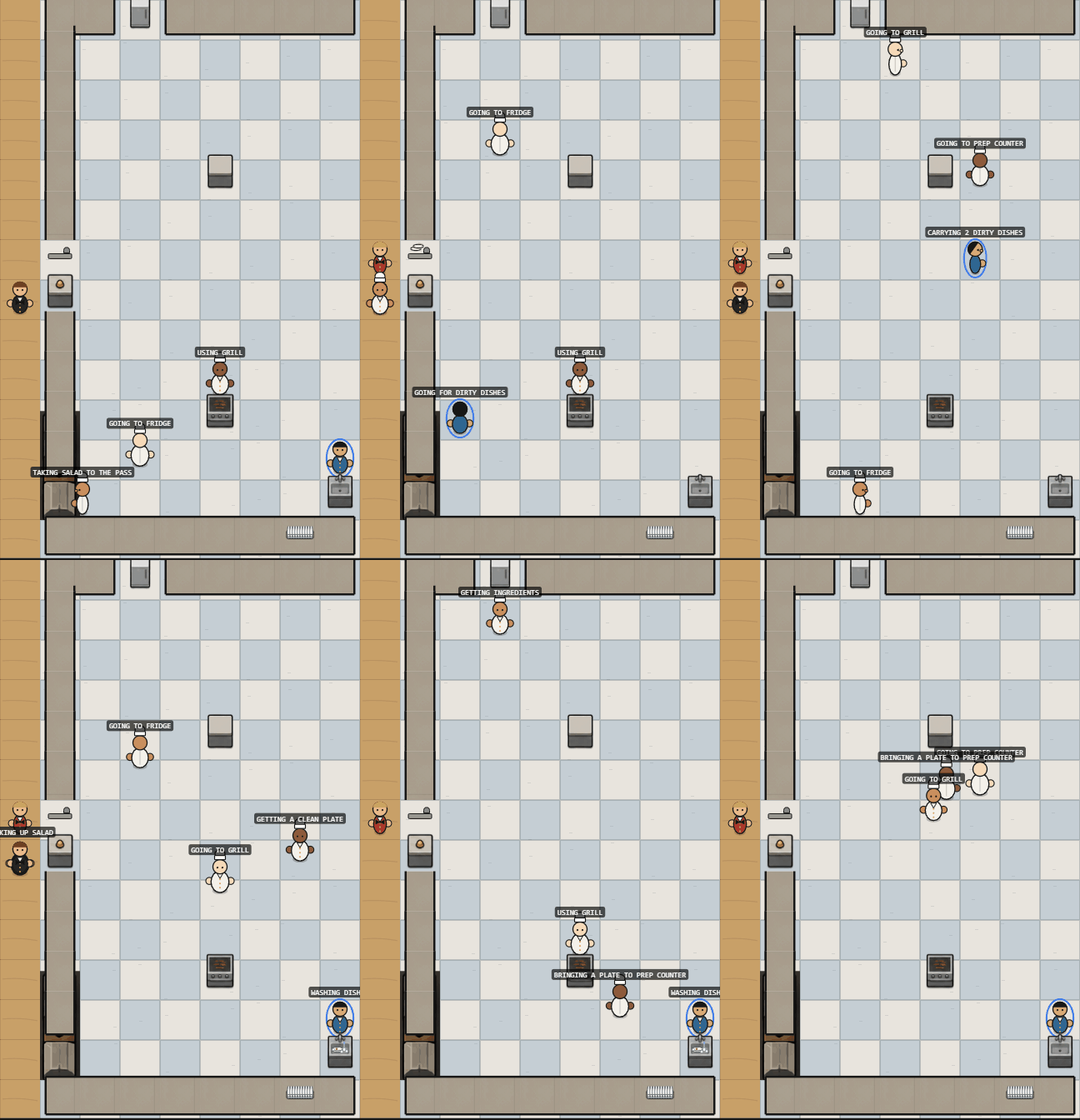
- The dishwasher now does real rounds. He walks to the dirty-dish bin, takes up to 4 plates from the kitchen side, carries them to the sink and washes them, then stacks them on a new clean dish rack on the back counter beside the sink. Plates used to jump straight from the bin to the sink and back into stock.
- Cooks now fetch their plates. When a dish is ready, the cook leaves the food at the station, walks to the clean rack for a plate, brings it back and plates the dish, then takes it to the pass. If the rack is empty, the cook waits there with "WAITING FOR A CLEAN PLATE".
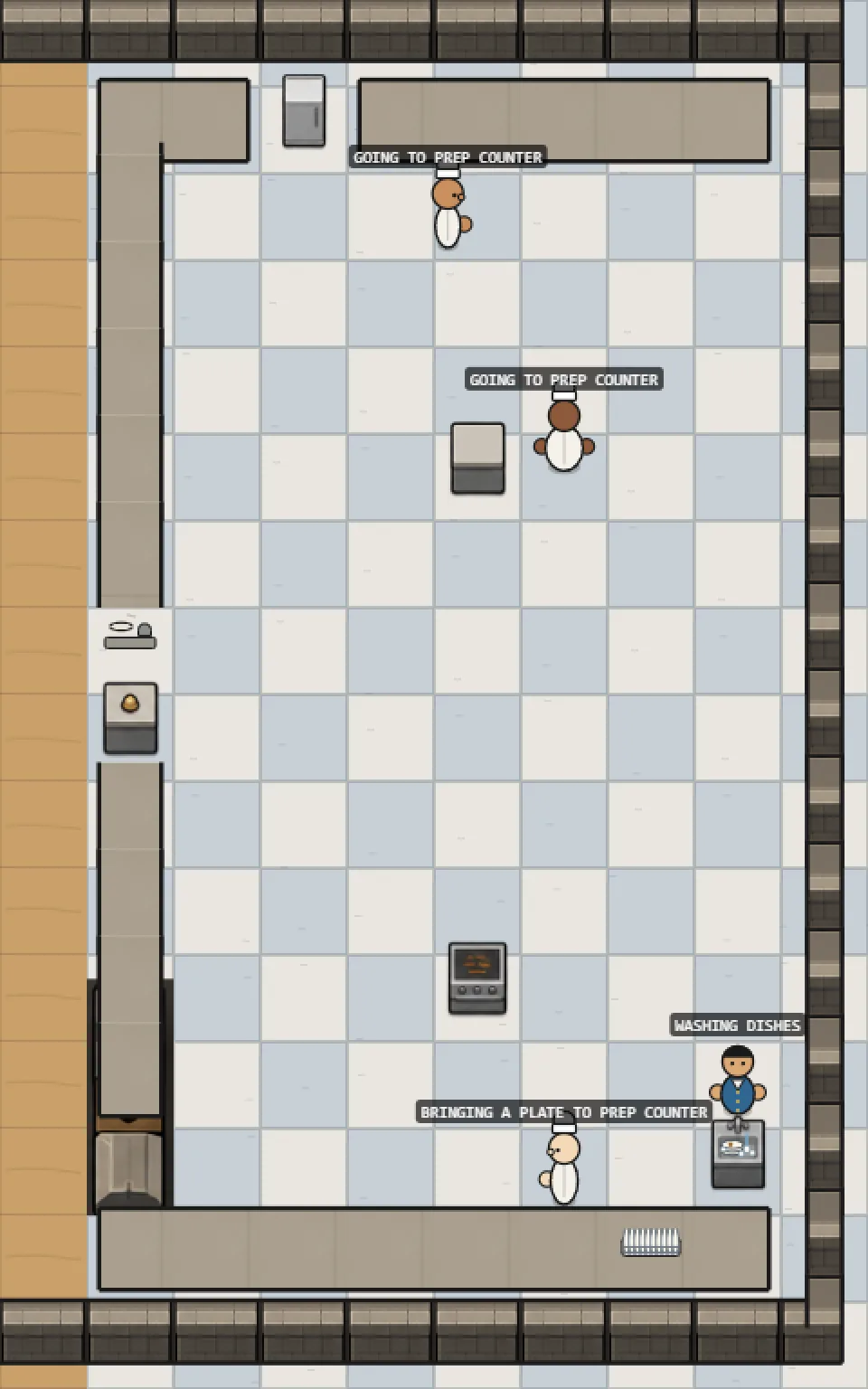
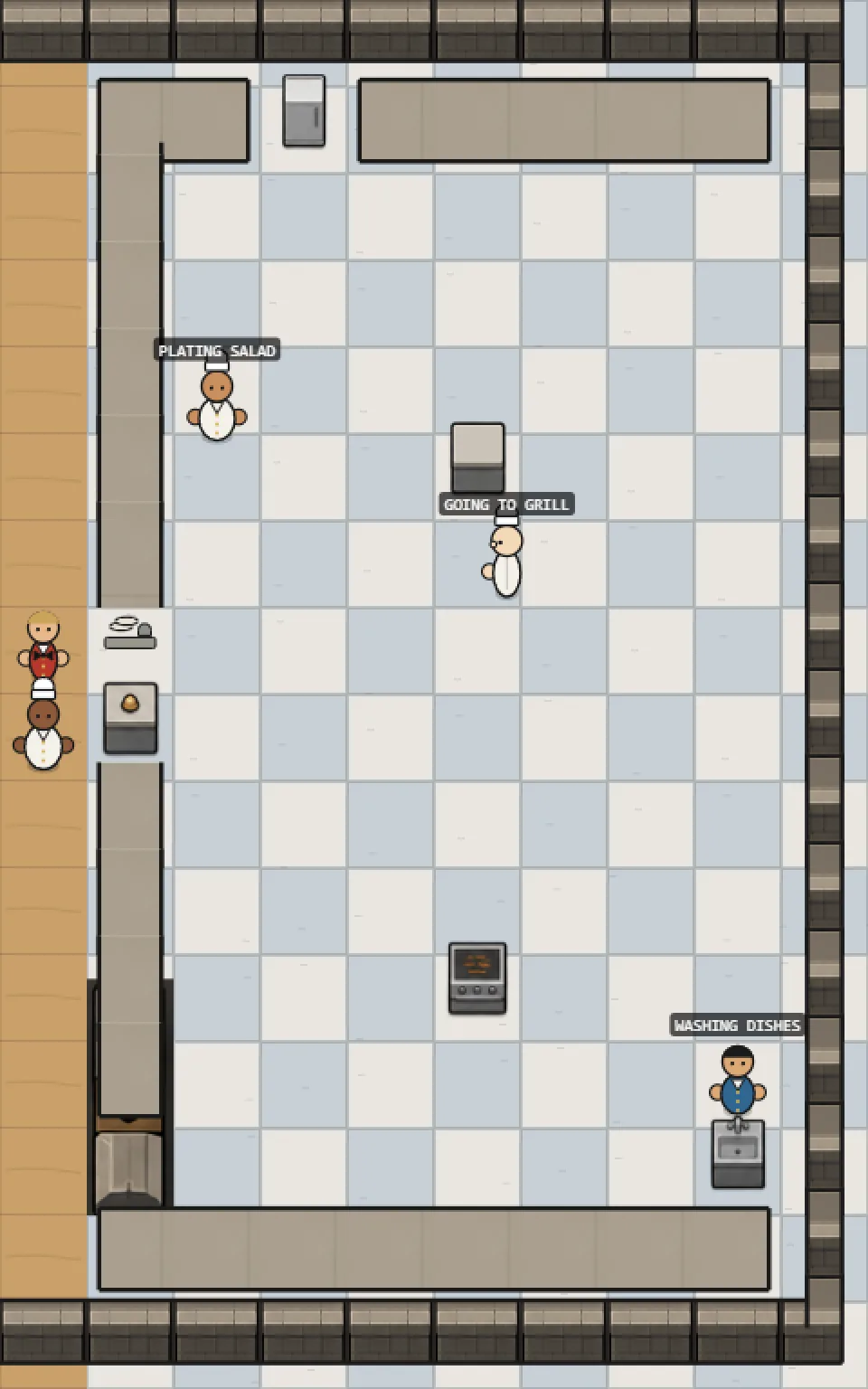
- The sink now shows what's happening: dirty plates stacked in the basin, running water and suds while a load is being washed. Before, the sink always looked dry and empty, even mid-wash. The clean rack shows one standing plate per clean plate on it.
- "Free plates" now means the plates on the rack, and "Dirty dishes" counts every dirty plate, whether on the bin, in the dishwasher's hands or in the sink.
- The extra walking costs the kitchen. Over 10 games of 15 minutes each, a default game now serves about 42 guests instead of 57, and loses about 36% of its guests instead of 8%. Plates never ran short; the time goes on cooks walking to the rack. The balance is provisional.
- Before and after, zoomed in on the kitchen: 076 shows the dishwasher "washing" at a dry, empty sink. 077 shows a load in the sink, the rack on the back counter and a cook bringing a plate back to the prep counter.
- The animated clip (118) was recorded on the v0.0.36 build itself: the ringed dishwasher's whole round (bin, sink, rack), with a cook walking across the kitchen to the rack for a plate, the walk Iteration 31 then cut.
 CHEF! September 16, 2026 Iteration 30
Dishes Are Carried, Not Teleported